
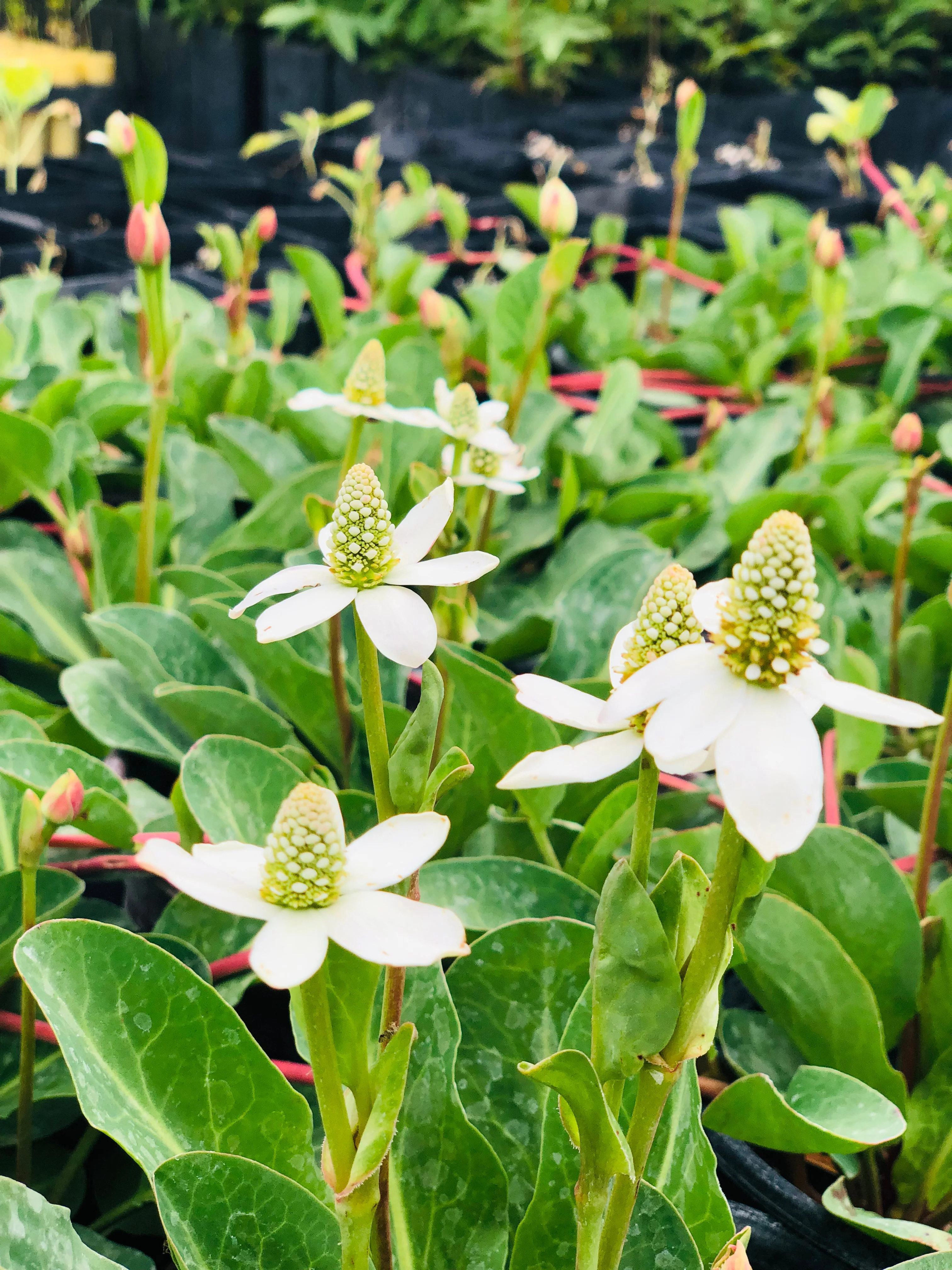
Anemopsis californica P9
Anemopsis californica, also known as yerba mansa, is a herbaceous perennial plant native to wetlands in California and Arizona. It grows up to 60 cm tall and produces large white flower spikes in the summer, which attract bees and other pollinators. The plant has been used for medicinal purposes by Native American tribes for centuries, with the roots and leaves being used to treat a variety of ailments including coughs, fever, and skin conditions.
Why we like it:
- Yerba mansa is a hardy plant that thrives in wet soils and can tolerate drought once established.
- Its large white flower spikes are striking and attractive to pollinators, making it a great addition to any garden.
- It has a long history of medicinal use, adding cultural and historical value to any landscape.
What to know:
- Yerba mansa prefers moist, well-drained soils and partial shade, but can also tolerate full sun.
- It spreads quickly via rhizomes, so it may require some maintenance to prevent it from taking over other plants in the garden.
- Its roots and leaves can cause skin irritation, so gloves should be worn when handling the plant.
- Yerba mansa is considered a threatened species in its native range, so it is important to obtain it from reputable nurseries and avoid harvesting from the wild.
- The flowering period of yerba mansa is from late spring to early summer.
Product Information
Product Information
Shipping & Returns
Shipping & Returns
Description
Anemopsis californica, also known as yerba mansa, is a herbaceous perennial plant native to wetlands in California and Arizona. It grows up to 60 cm tall and produces large white flower spikes in the summer, which attract bees and other pollinators. The plant has been used for medicinal purposes by Native American tribes for centuries, with the roots and leaves being used to treat a variety of ailments including coughs, fever, and skin conditions.
Why we like it:
- Yerba mansa is a hardy plant that thrives in wet soils and can tolerate drought once established.
- Its large white flower spikes are striking and attractive to pollinators, making it a great addition to any garden.
- It has a long history of medicinal use, adding cultural and historical value to any landscape.
What to know:
- Yerba mansa prefers moist, well-drained soils and partial shade, but can also tolerate full sun.
- It spreads quickly via rhizomes, so it may require some maintenance to prevent it from taking over other plants in the garden.
- Its roots and leaves can cause skin irritation, so gloves should be worn when handling the plant.
- Yerba mansa is considered a threatened species in its native range, so it is important to obtain it from reputable nurseries and avoid harvesting from the wild.
- The flowering period of yerba mansa is from late spring to early summer.