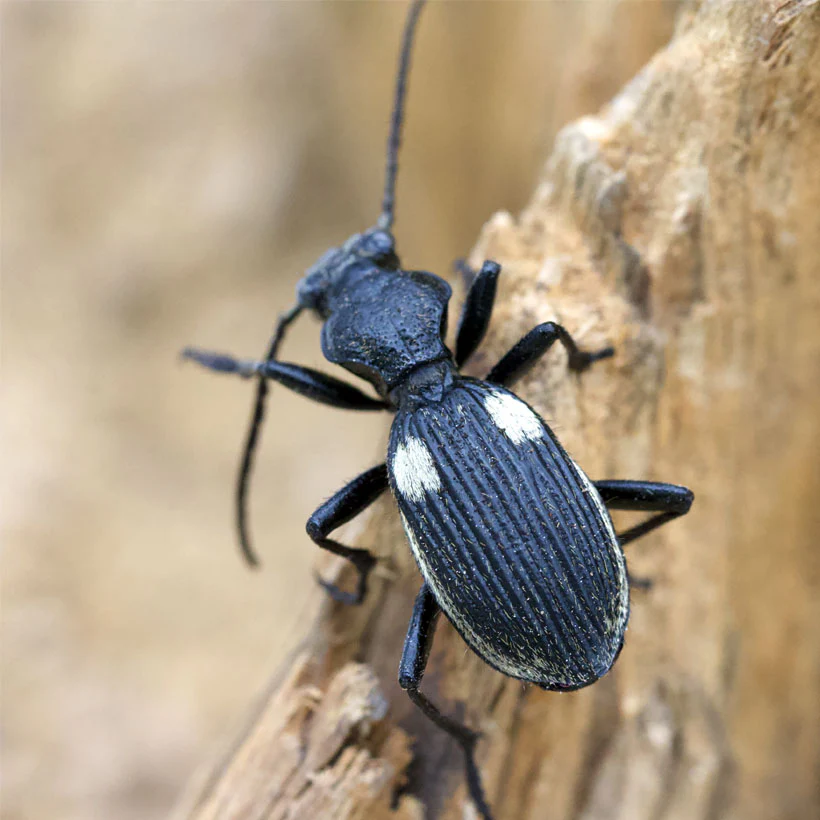
African Ground Beetle | Anthia Biguttata Nigeria
Anthia biguttata (Nigeria) Care Sheet
Quick Facts
| Attribute | Details |
|---|---|
| Common Name | Anthia Beetle / Ground Beetle |
| Scientific Name | Anthia biguttata |
| Origin | Nigeria (dry savanna regions) |
| Adult Size | 4–6 cm |
| Lifespan | 1–3 years in captivity |
| Activity | Nocturnal; highly active predator |
Behavior
-
Extremely fast, alert, and aggressive predators.
-
Can spray defensive chemicals if threatened—avoid handling.
-
Solitary hunters; highly territorial.
-
Prefers staying at ground level but can climb short surfaces.
Enclosure Requirements
-
Tank Size: Minimum 30 liters for one adult; larger if housing pairs
-
Substrate: 3–5 cm of dry sand-soil mix or coco fiber; mostly dry
-
Decor: Flat rocks, bark pieces, low hides, branches
-
Humidity: 40–60% (low to moderate)
-
Temperature:
-
Day: 24–29°C
-
Night: 20–22°C
-
-
Lighting: Low light; no special lighting needed
-
Ventilation: Good airflow is essential; avoid moisture buildup
Compatibility
-
Best housed singly or as a monitored pair.
-
Cannibalistic—do not house with other beetle species, smaller invertebrates, or conspecifics outside monitored breeding attempts.
Diet
-
Strictly carnivorous. Feed live prey:
-
Crickets
-
Roaches
-
Mealworms / superworms
-
Waxworms (occasional treat)
-
-
Feeding Frequency: 2-3× per week
-
Remove uneaten prey after 24 hours
-
Provide a shallow water dish
Care Tips
-
Avoid handling—the beetle’s defensive spray can irritate skin and eyes.
-
Maintain dry substrate; occasional light misting is enough.
-
Provide multiple hiding spots to reduce stress.
-
Clean uneaten prey and waste promptly.
-
Ensure escape-proof enclosure; beetles are strong climbers and very fast.
Breeding
-
Breeding is challenging in captivity.
-
Females lay eggs in dry soil; larvae are predatory and require deep substrate.
-
Cannibalism among larvae is common—requires isolated rearing.
Visual Quick Guide
-
🏠 Enclosure: ≥30 L, dry substrate, multiple hides
-
🌡️ Temp: Day 24–29°C / Night 20–22°C
-
💧 Humidity: 40–60%
-
🍴 Diet: Carnivorous (live insects)
-
🕒 Activity: Nocturnal, extremely fast
-
⚠️ Stress: Avoid handling; provide hides
Product Information
Product Information
Shipping & Returns
Shipping & Returns
Description
Anthia biguttata (Nigeria) Care Sheet
Quick Facts
| Attribute | Details |
|---|---|
| Common Name | Anthia Beetle / Ground Beetle |
| Scientific Name | Anthia biguttata |
| Origin | Nigeria (dry savanna regions) |
| Adult Size | 4–6 cm |
| Lifespan | 1–3 years in captivity |
| Activity | Nocturnal; highly active predator |
Behavior
-
Extremely fast, alert, and aggressive predators.
-
Can spray defensive chemicals if threatened—avoid handling.
-
Solitary hunters; highly territorial.
-
Prefers staying at ground level but can climb short surfaces.
Enclosure Requirements
-
Tank Size: Minimum 30 liters for one adult; larger if housing pairs
-
Substrate: 3–5 cm of dry sand-soil mix or coco fiber; mostly dry
-
Decor: Flat rocks, bark pieces, low hides, branches
-
Humidity: 40–60% (low to moderate)
-
Temperature:
-
Day: 24–29°C
-
Night: 20–22°C
-
-
Lighting: Low light; no special lighting needed
-
Ventilation: Good airflow is essential; avoid moisture buildup
Compatibility
-
Best housed singly or as a monitored pair.
-
Cannibalistic—do not house with other beetle species, smaller invertebrates, or conspecifics outside monitored breeding attempts.
Diet
-
Strictly carnivorous. Feed live prey:
-
Crickets
-
Roaches
-
Mealworms / superworms
-
Waxworms (occasional treat)
-
-
Feeding Frequency: 2-3× per week
-
Remove uneaten prey after 24 hours
-
Provide a shallow water dish
Care Tips
-
Avoid handling—the beetle’s defensive spray can irritate skin and eyes.
-
Maintain dry substrate; occasional light misting is enough.
-
Provide multiple hiding spots to reduce stress.
-
Clean uneaten prey and waste promptly.
-
Ensure escape-proof enclosure; beetles are strong climbers and very fast.
Breeding
-
Breeding is challenging in captivity.
-
Females lay eggs in dry soil; larvae are predatory and require deep substrate.
-
Cannibalism among larvae is common—requires isolated rearing.
Visual Quick Guide
-
🏠 Enclosure: ≥30 L, dry substrate, multiple hides
-
🌡️ Temp: Day 24–29°C / Night 20–22°C
-
💧 Humidity: 40–60%
-
🍴 Diet: Carnivorous (live insects)
-
🕒 Activity: Nocturnal, extremely fast
-
⚠️ Stress: Avoid handling; provide hides