Ceanothus thyr. repens / 2 Ltr pot
Ceanothus thyrsiflorus 'Repens' (2 Ltr Pot)
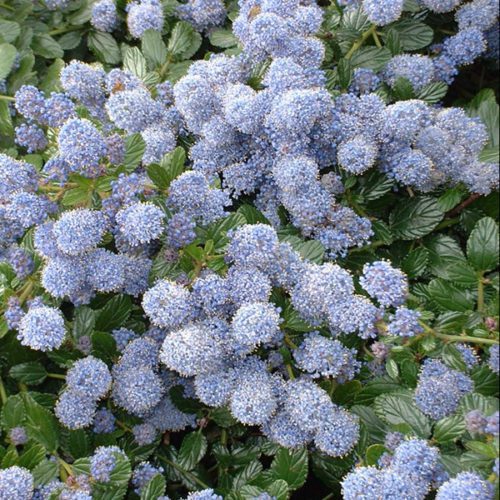
Ceanothus thyrsiflorus 'Repens', commonly known as the Creeping Blue Blossom, is a low-growing variety of California Lilac. This cultivar is well-suited for ground cover due to its spreading habit and is ideal for slopes and banks where erosion control is needed. It's also perfect for smaller gardens or as an underplanting in larger landscape designs. The 2-liter pot size is a common choice for gardeners who want to establish a mature and spreading ground cover relatively quickly.
Why we like it:
- Ground Cover Capabilities: Excellent for covering large areas, reducing erosion, and suppressing weeds.
- Vibrant Blue Flowers: Produces profuse, bright blue flowers in spring, adding a spectacular burst of color to the landscape.
- Drought Tolerance: Highly drought-resistant once established, making it ideal for water-wise gardens.
What to know:
- Sun Exposure: Thrives in full sun, achieving maximum flowering and health.
- Soil Requirements: Prefers well-drained soils but is adaptable to various soil types, as long as they are not overly wet.
- Watering Needs: Needs regular watering until established; thereafter, it is quite drought-tolerant.
- Pruning: Prune lightly after flowering to maintain shape and promote denser growth.
- Fertilization: Generally requires little to no fertilization. If needed, apply a low-nitrogen fertilizer sparingly to avoid stimulating excessive vegetative growth over floral development.
Flower Colour
Bright blue
Flowering months
Typically blooms in late spring to early summer.
Height and Spread at Maturity
Grows to about 30-60 cm in height and can spread up to 2 meters or more, making it an effective ground cover.
Ceanothus thyrsiflorus 'Repens' is a fantastic choice for gardeners seeking a low-maintenance, attractive ground cover that stabilizes slopes and adds vibrant color. Its ability to adapt to different soil conditions and its drought tolerance make it especially valuable in regions with water restrictions or xeriscape gardens.
Original: $12.84
-65%$12.84
$4.49Product Information
Product Information
Shipping & Returns
Shipping & Returns
Description
Ceanothus thyrsiflorus 'Repens' (2 Ltr Pot)
Ceanothus thyrsiflorus 'Repens', commonly known as the Creeping Blue Blossom, is a low-growing variety of California Lilac. This cultivar is well-suited for ground cover due to its spreading habit and is ideal for slopes and banks where erosion control is needed. It's also perfect for smaller gardens or as an underplanting in larger landscape designs. The 2-liter pot size is a common choice for gardeners who want to establish a mature and spreading ground cover relatively quickly.
Why we like it:
- Ground Cover Capabilities: Excellent for covering large areas, reducing erosion, and suppressing weeds.
- Vibrant Blue Flowers: Produces profuse, bright blue flowers in spring, adding a spectacular burst of color to the landscape.
- Drought Tolerance: Highly drought-resistant once established, making it ideal for water-wise gardens.
What to know:
- Sun Exposure: Thrives in full sun, achieving maximum flowering and health.
- Soil Requirements: Prefers well-drained soils but is adaptable to various soil types, as long as they are not overly wet.
- Watering Needs: Needs regular watering until established; thereafter, it is quite drought-tolerant.
- Pruning: Prune lightly after flowering to maintain shape and promote denser growth.
- Fertilization: Generally requires little to no fertilization. If needed, apply a low-nitrogen fertilizer sparingly to avoid stimulating excessive vegetative growth over floral development.
Flower Colour
Bright blue
Flowering months
Typically blooms in late spring to early summer.
Height and Spread at Maturity
Grows to about 30-60 cm in height and can spread up to 2 meters or more, making it an effective ground cover.
Ceanothus thyrsiflorus 'Repens' is a fantastic choice for gardeners seeking a low-maintenance, attractive ground cover that stabilizes slopes and adds vibrant color. Its ability to adapt to different soil conditions and its drought tolerance make it especially valuable in regions with water restrictions or xeriscape gardens.