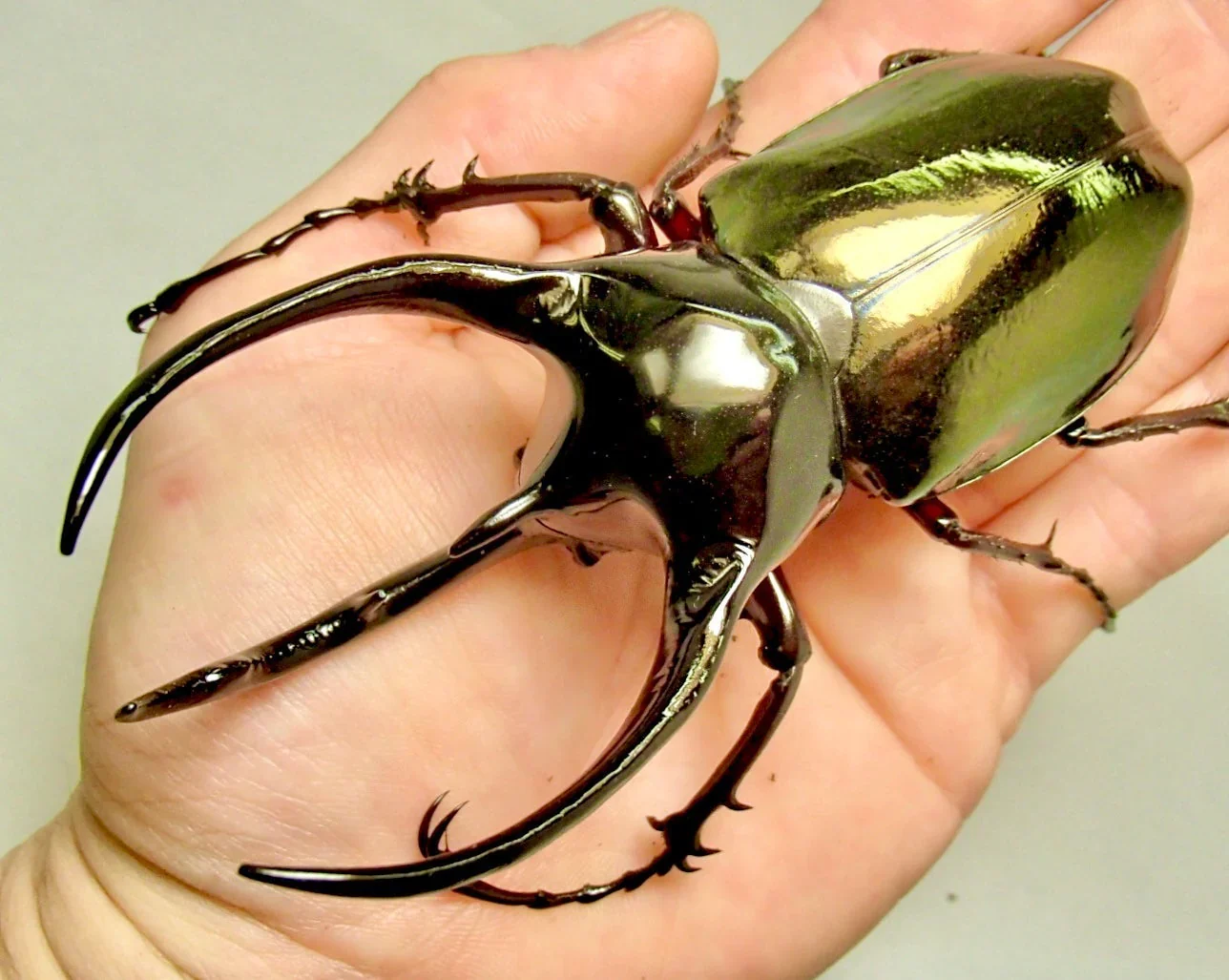
Caucasus Beetle Larva (Chalcosoma Caucasus) Larve
Chalcosoma caucasus Larvae Care Sheet
Quick Facts
| Attribute | Details |
|---|---|
| Common Name | Caucasus Beetle Larvae |
| Scientific Name | Chalcosoma caucasus |
| Origin | Southeast Asia (Indonesia, Malaysia) |
| Larval Size | Up to 8–10 cm before pupation |
| Lifespan | Larval stage: 6–12 months; total lifespan 1–2 years |
| Activity | Burrowing, detritivorous |
Behavior
-
Burrower; spends most of its life inside substrate feeding on decaying organic matter.
-
Solitary; aggressive toward other larvae if crowded.
-
Requires dark, moist environment for optimal growth.
Enclosure Requirements
-
Container Size: Minimum 5–10 liters per larva; larger if rearing multiple individuals
-
Substrate: 15–20 cm of decayed hardwood substrate, leaf litter, or coconut fiber mix
-
Humidity: 70–80% (substrate should be moist but not waterlogged)
-
Temperature:
-
Optimal: 24–28°C
-
Avoid temperatures below 20°C or above 30°C
-
-
Decor: None required; larvae remain buried
-
Ventilation: Moderate airflow to prevent mold while maintaining moisture
Compatibility
-
Best housed individually or with plenty of space; larvae may fight if overcrowded.
-
Avoid housing with other beetle species or small invertebrates.
Diet
-
Detritivore; feeds on decaying wood, leaf litter, and organic matter.
-
Ensure substrate is rich in organic material for growth.
-
Avoid adding fresh food that may rot too quickly.
Care Tips
-
Maintain consistent moisture; check substrate weekly.
-
Avoid direct sunlight; larvae are sensitive to temperature spikes.
-
Clean any moldy spots promptly to prevent fungal infection.
-
Ensure substrate depth allows full burrowing.
Breeding
-
Larvae are obtained from eggs laid by adult males and females.
-
Pupation occurs in a separate pupal chamber within the substrate.
-
Adult emergence takes 2–3 months after pupation depending on conditions.
Visual Quick Guide
-
🏠 Enclosure: ≥5–10 L per larva, deep substrate
-
🌡️ Temp: 24–28°C
-
💧 Humidity: 70–80%
-
🍴 Diet: Detritivore (decayed wood, leaf litter)
-
🕒 Activity: Burrowing, nocturnal
-
⚠️ Stress: Avoid overcrowding; maintain deep, moist substrate
Original: $39.70
-65%$39.70
$13.89Product Information
Product Information
Shipping & Returns
Shipping & Returns
Description
Chalcosoma caucasus Larvae Care Sheet
Quick Facts
| Attribute | Details |
|---|---|
| Common Name | Caucasus Beetle Larvae |
| Scientific Name | Chalcosoma caucasus |
| Origin | Southeast Asia (Indonesia, Malaysia) |
| Larval Size | Up to 8–10 cm before pupation |
| Lifespan | Larval stage: 6–12 months; total lifespan 1–2 years |
| Activity | Burrowing, detritivorous |
Behavior
-
Burrower; spends most of its life inside substrate feeding on decaying organic matter.
-
Solitary; aggressive toward other larvae if crowded.
-
Requires dark, moist environment for optimal growth.
Enclosure Requirements
-
Container Size: Minimum 5–10 liters per larva; larger if rearing multiple individuals
-
Substrate: 15–20 cm of decayed hardwood substrate, leaf litter, or coconut fiber mix
-
Humidity: 70–80% (substrate should be moist but not waterlogged)
-
Temperature:
-
Optimal: 24–28°C
-
Avoid temperatures below 20°C or above 30°C
-
-
Decor: None required; larvae remain buried
-
Ventilation: Moderate airflow to prevent mold while maintaining moisture
Compatibility
-
Best housed individually or with plenty of space; larvae may fight if overcrowded.
-
Avoid housing with other beetle species or small invertebrates.
Diet
-
Detritivore; feeds on decaying wood, leaf litter, and organic matter.
-
Ensure substrate is rich in organic material for growth.
-
Avoid adding fresh food that may rot too quickly.
Care Tips
-
Maintain consistent moisture; check substrate weekly.
-
Avoid direct sunlight; larvae are sensitive to temperature spikes.
-
Clean any moldy spots promptly to prevent fungal infection.
-
Ensure substrate depth allows full burrowing.
Breeding
-
Larvae are obtained from eggs laid by adult males and females.
-
Pupation occurs in a separate pupal chamber within the substrate.
-
Adult emergence takes 2–3 months after pupation depending on conditions.
Visual Quick Guide
-
🏠 Enclosure: ≥5–10 L per larva, deep substrate
-
🌡️ Temp: 24–28°C
-
💧 Humidity: 70–80%
-
🍴 Diet: Detritivore (decayed wood, leaf litter)
-
🕒 Activity: Burrowing, nocturnal
-
⚠️ Stress: Avoid overcrowding; maintain deep, moist substrate