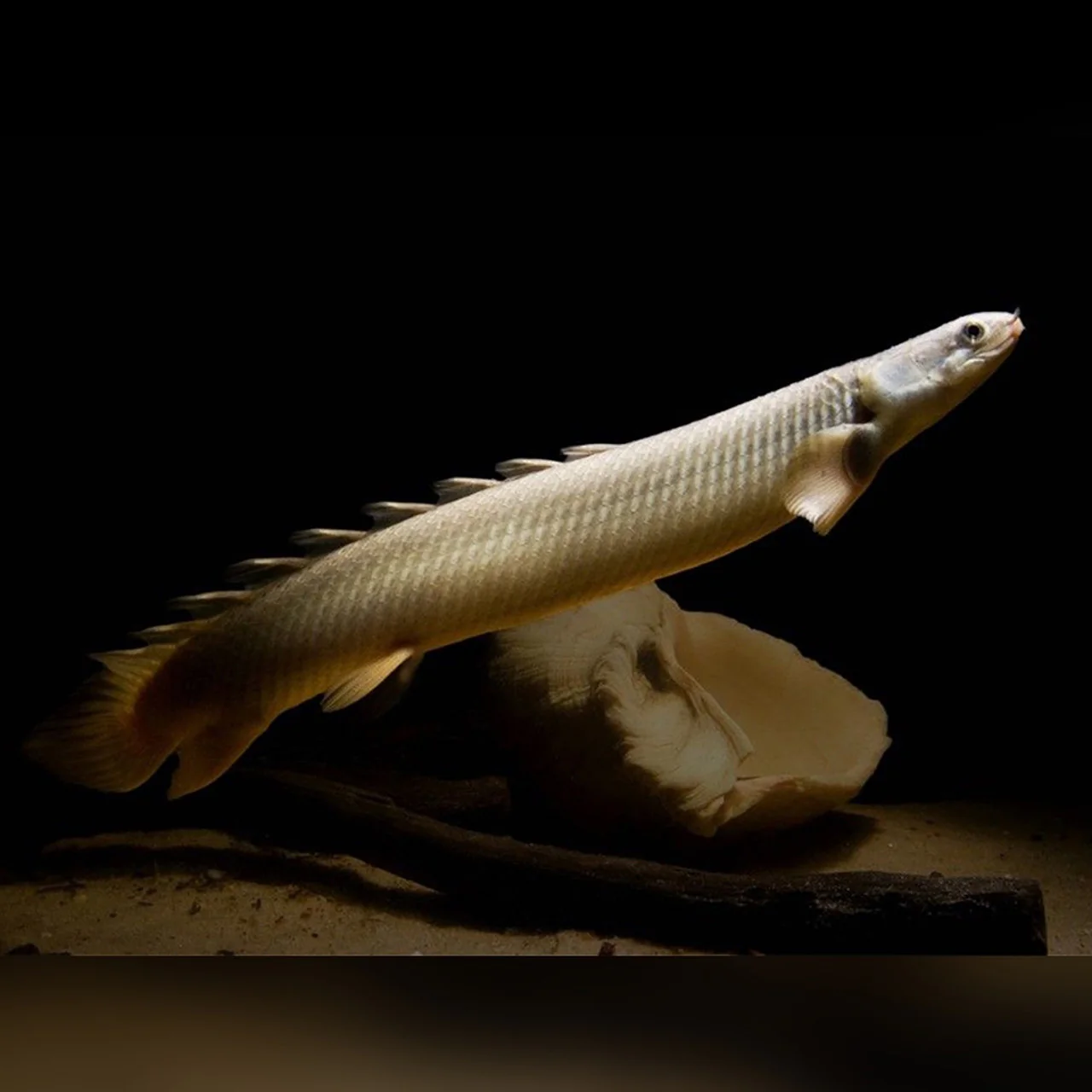
Polypterus Senegalus | Senegal Bichir
🐟 Senegal Bichir Care Sheet
🔹 Overview
| Category | Details |
|---|---|
| Scientific Name | Polypterus senegalus |
| Common Name | Senegal Bichir, Dinosaur Eel, Senegal Polypterus |
| Origin | West Africa (Senegal, Niger, Gambia, Sudan) |
| Adult Size | 30–45 cm (12–18 in) |
| Lifespan | 10–15 years |
| Temperament | Semi-aggressive; predatory, territorial toward smaller fish |
| Tank Level | Bottom-dweller / mid-level swimmer |
🔹 Tank Setup
| Parameter | Ideal Range |
|---|---|
| Tank Size | 200+ liters (55+ gallons) for a single adult |
| Temperature | 24–28 °C (75–82 °F) |
| pH | 6.5–7.5 |
| Hardness | Soft to medium (5–15 dGH) |
| Substrate | Sand or fine gravel (smooth to avoid injury) |
| Decor | Driftwood, rocks, caves, dense plants |
| Lighting | Low to moderate |
| Filtration | Moderate to strong; well-oxygenated water |
Care Notes:
-
Nocturnal or crepuscular—most active at dawn and dusk.
-
Requires secure tank lid; can breathe atmospheric air using its lungs.
-
Provide plenty of hiding spots; prefers calm water.
🔹 Diet
-
Type: Carnivorous / predatory
-
Best Foods: Live/frozen fish, shrimp, worms, bloodworms, earthworms, sinking pellets for carnivores
-
Feeding Frequency: Every 1–2 days; avoid overfeeding
🔹 Behavior & Compatibility
-
Generally peaceful with larger tankmates but will eat small fish.
-
Semi-aggressive and territorial toward other bottom dwellers of similar size.
-
Can coexist with medium to large cichlids, large catfish, and other bichirs.
🧭 Tank Mate Guide
✅ Compatible Species
-
Larger peaceful or semi-aggressive cichlids
-
Large catfish (Synodontis, Plecos)
-
Large rainbowfish and other robust species
⚠️ Avoid
-
Small fish under 5–7 cm (likely to be eaten)
-
Aggressive species that compete for the same territory
-
Overcrowded tanks
🐣 Breeding Info
-
Difficulty: Very difficult in captivity
-
Method: Egg scatterers in shallow pits; parental care minimal
-
Notes: Mostly bred by advanced aquarists or professional breeders
🌿 Fun Facts
-
Known as a “living fossil” due to primitive lung structure and external gills in juveniles.
-
Can breathe atmospheric air—requires access to the surface.
-
Calm, slow-moving predator; fascinating behavior for large tanks.
Please note We don't ship live animals. You can order online and choose click and collect and we will hold it for you.
Product Information
Product Information
Shipping & Returns
Shipping & Returns
Description
🐟 Senegal Bichir Care Sheet
🔹 Overview
| Category | Details |
|---|---|
| Scientific Name | Polypterus senegalus |
| Common Name | Senegal Bichir, Dinosaur Eel, Senegal Polypterus |
| Origin | West Africa (Senegal, Niger, Gambia, Sudan) |
| Adult Size | 30–45 cm (12–18 in) |
| Lifespan | 10–15 years |
| Temperament | Semi-aggressive; predatory, territorial toward smaller fish |
| Tank Level | Bottom-dweller / mid-level swimmer |
🔹 Tank Setup
| Parameter | Ideal Range |
|---|---|
| Tank Size | 200+ liters (55+ gallons) for a single adult |
| Temperature | 24–28 °C (75–82 °F) |
| pH | 6.5–7.5 |
| Hardness | Soft to medium (5–15 dGH) |
| Substrate | Sand or fine gravel (smooth to avoid injury) |
| Decor | Driftwood, rocks, caves, dense plants |
| Lighting | Low to moderate |
| Filtration | Moderate to strong; well-oxygenated water |
Care Notes:
-
Nocturnal or crepuscular—most active at dawn and dusk.
-
Requires secure tank lid; can breathe atmospheric air using its lungs.
-
Provide plenty of hiding spots; prefers calm water.
🔹 Diet
-
Type: Carnivorous / predatory
-
Best Foods: Live/frozen fish, shrimp, worms, bloodworms, earthworms, sinking pellets for carnivores
-
Feeding Frequency: Every 1–2 days; avoid overfeeding
🔹 Behavior & Compatibility
-
Generally peaceful with larger tankmates but will eat small fish.
-
Semi-aggressive and territorial toward other bottom dwellers of similar size.
-
Can coexist with medium to large cichlids, large catfish, and other bichirs.
🧭 Tank Mate Guide
✅ Compatible Species
-
Larger peaceful or semi-aggressive cichlids
-
Large catfish (Synodontis, Plecos)
-
Large rainbowfish and other robust species
⚠️ Avoid
-
Small fish under 5–7 cm (likely to be eaten)
-
Aggressive species that compete for the same territory
-
Overcrowded tanks
🐣 Breeding Info
-
Difficulty: Very difficult in captivity
-
Method: Egg scatterers in shallow pits; parental care minimal
-
Notes: Mostly bred by advanced aquarists or professional breeders
🌿 Fun Facts
-
Known as a “living fossil” due to primitive lung structure and external gills in juveniles.
-
Can breathe atmospheric air—requires access to the surface.
-
Calm, slow-moving predator; fascinating behavior for large tanks.
Please note We don't ship live animals. You can order online and choose click and collect and we will hold it for you.