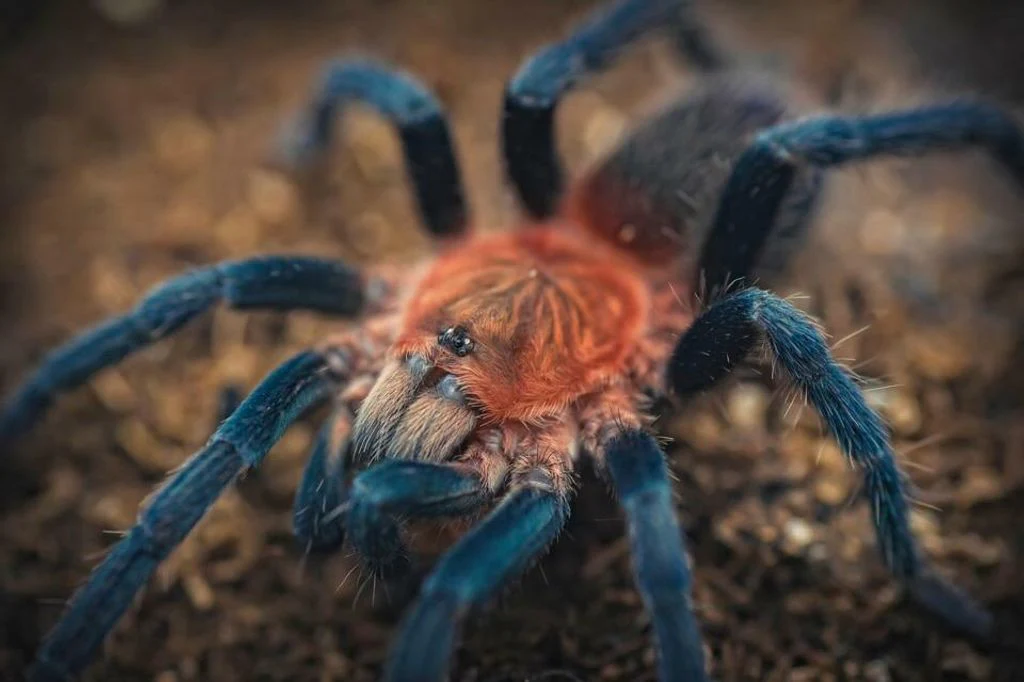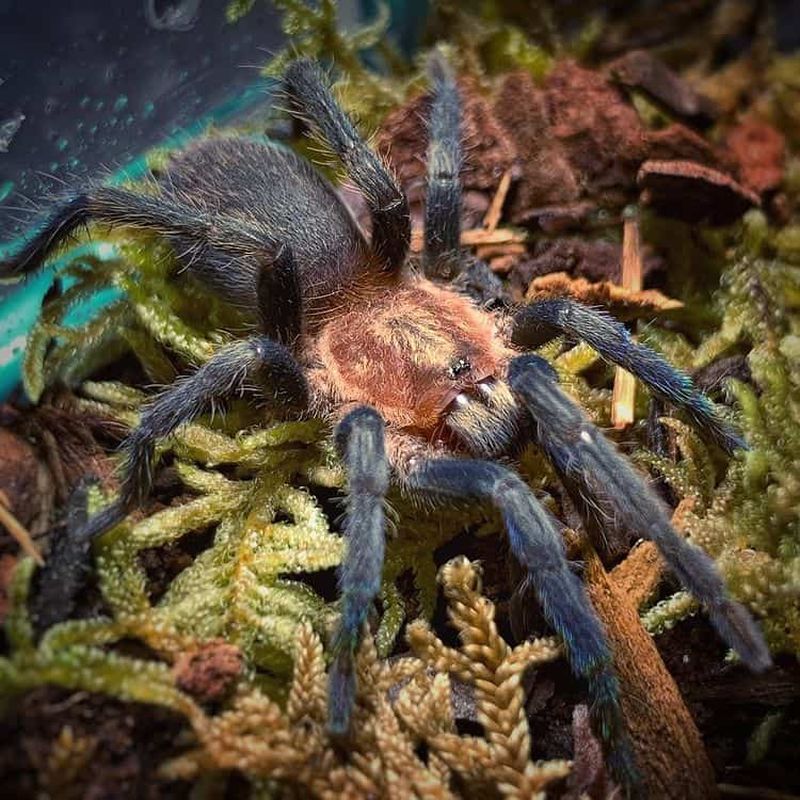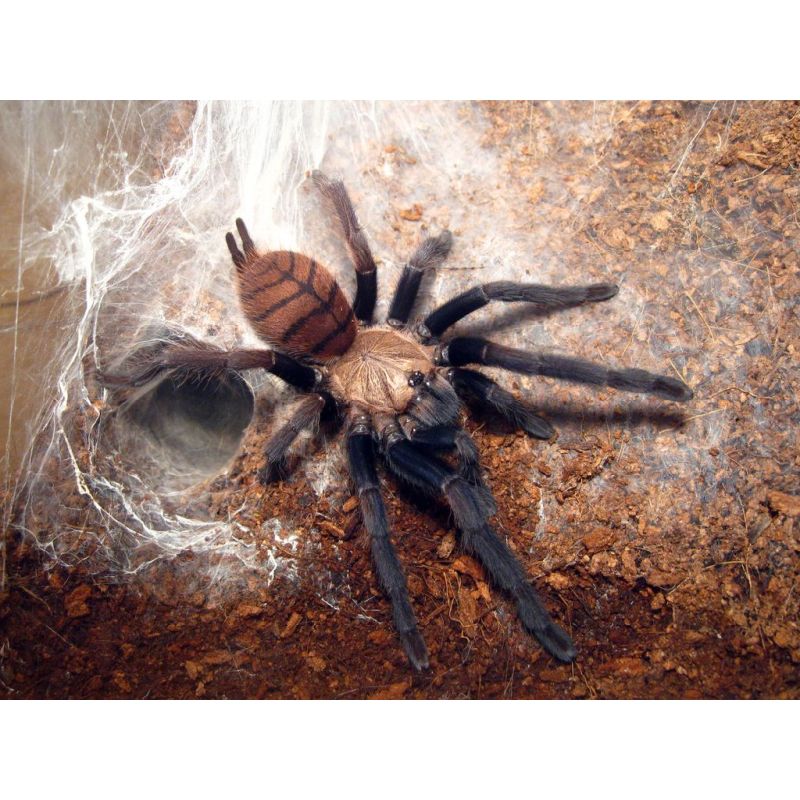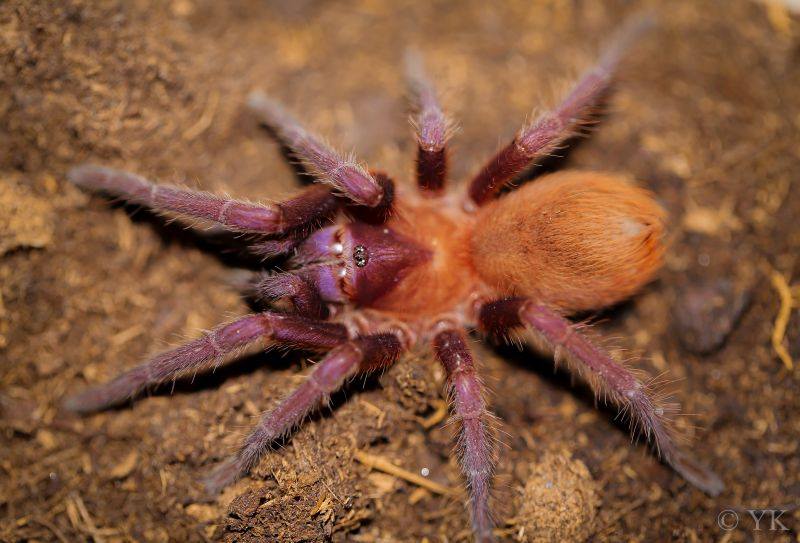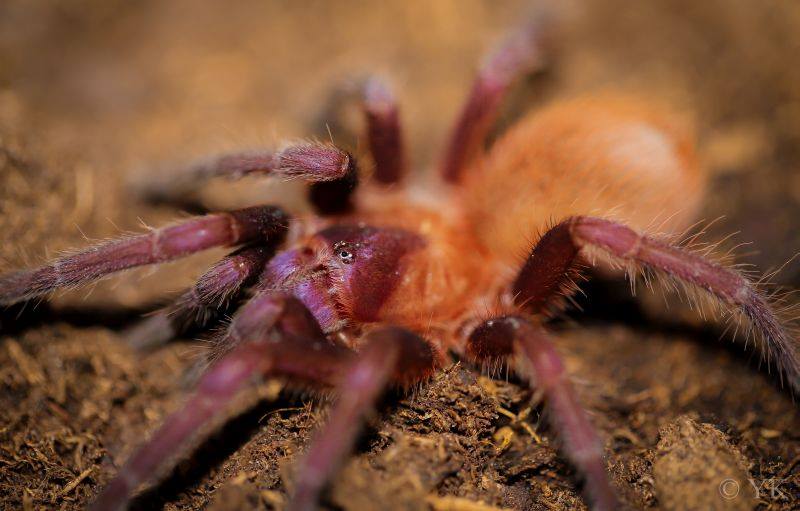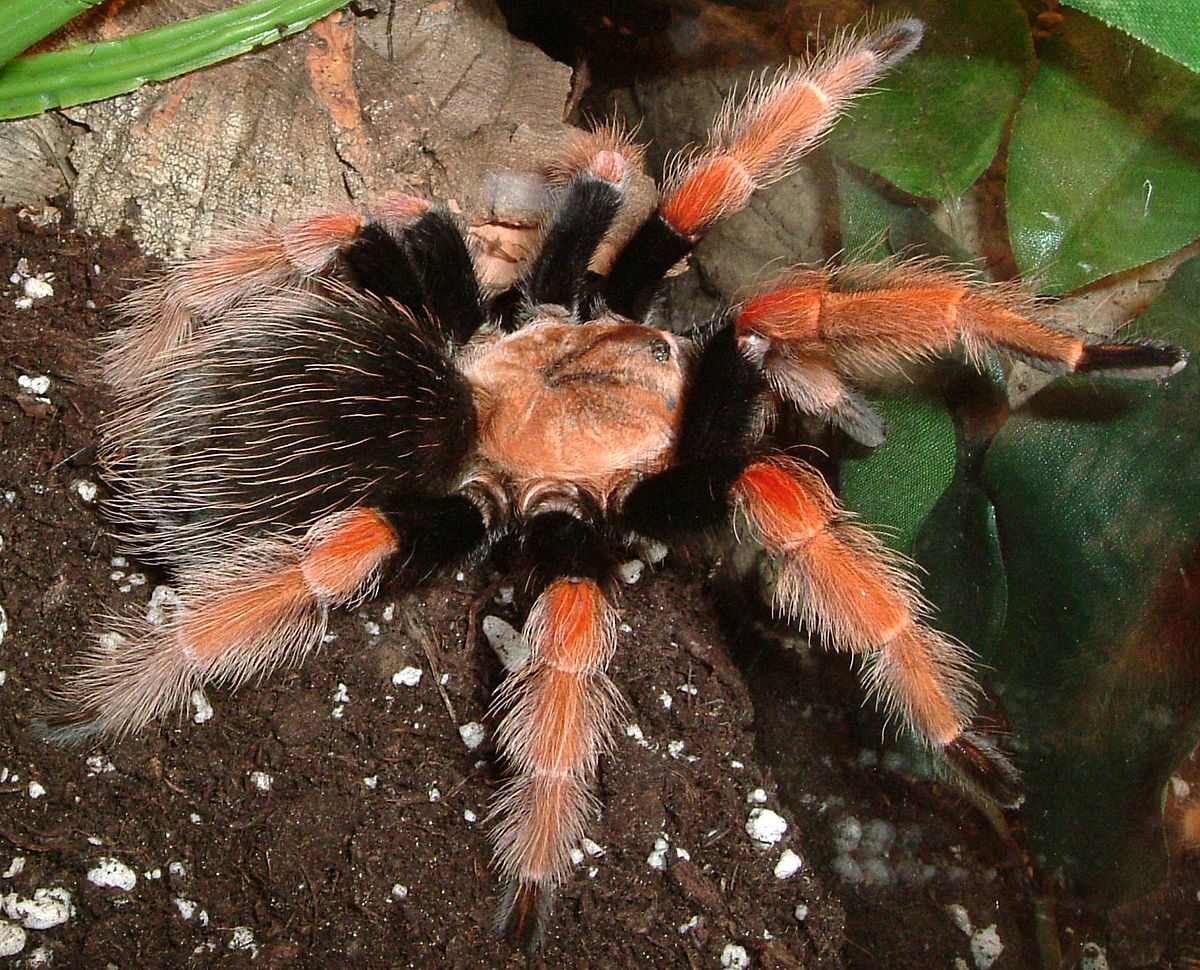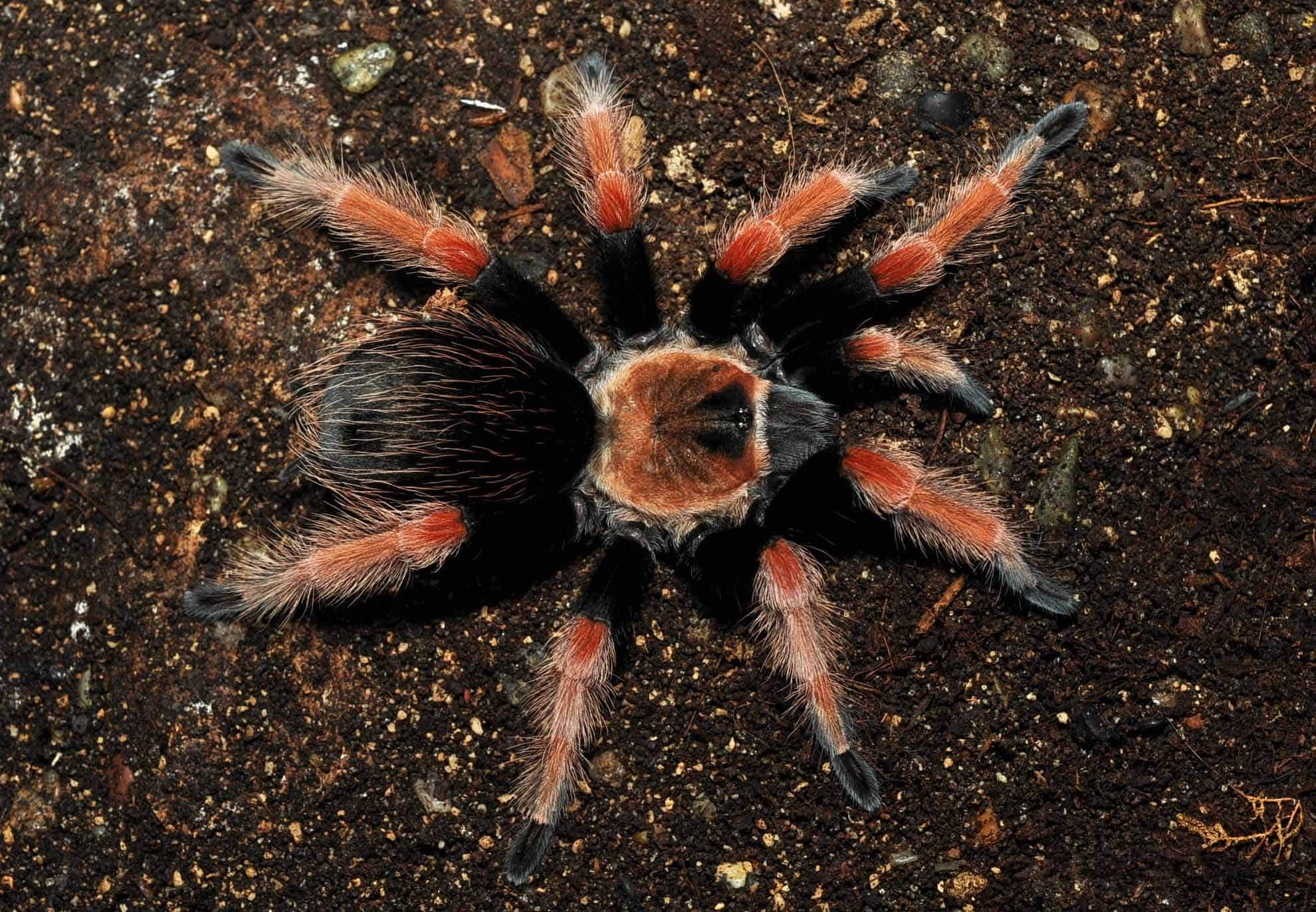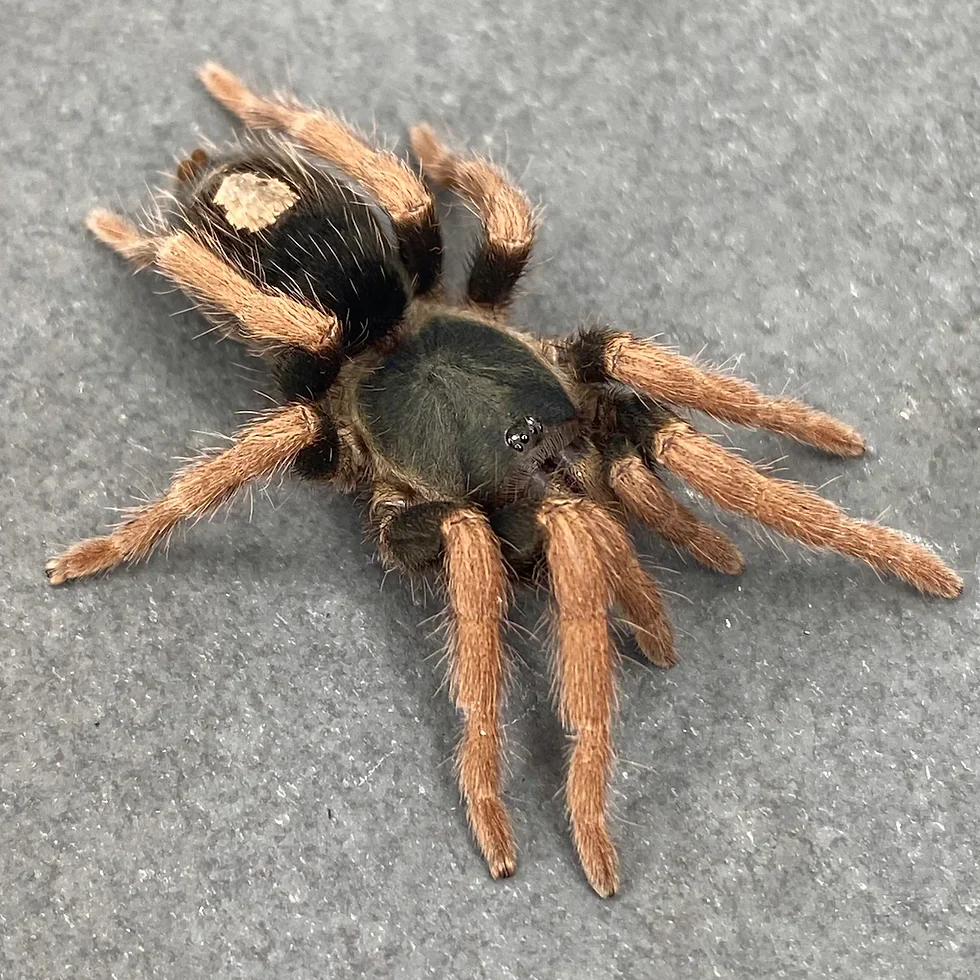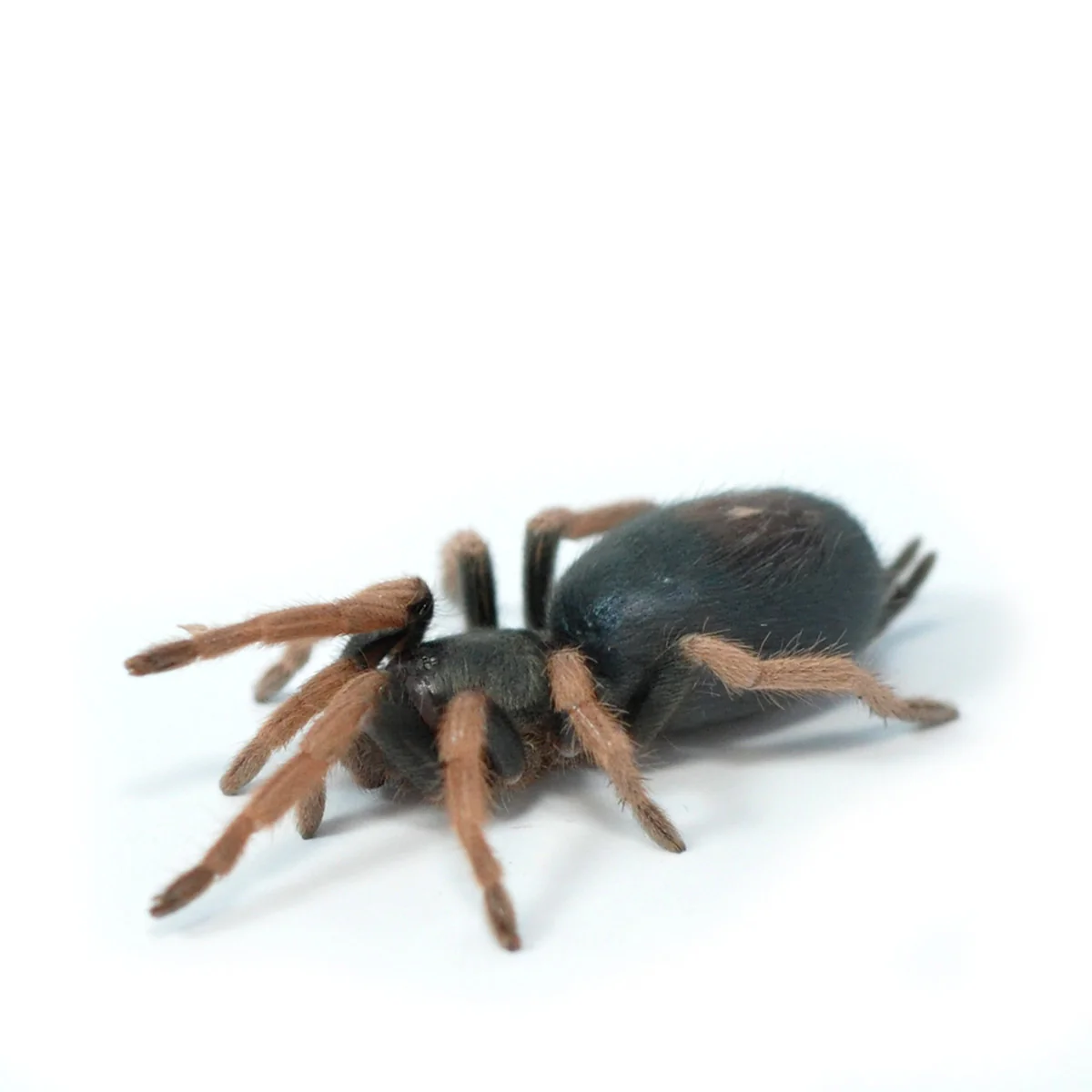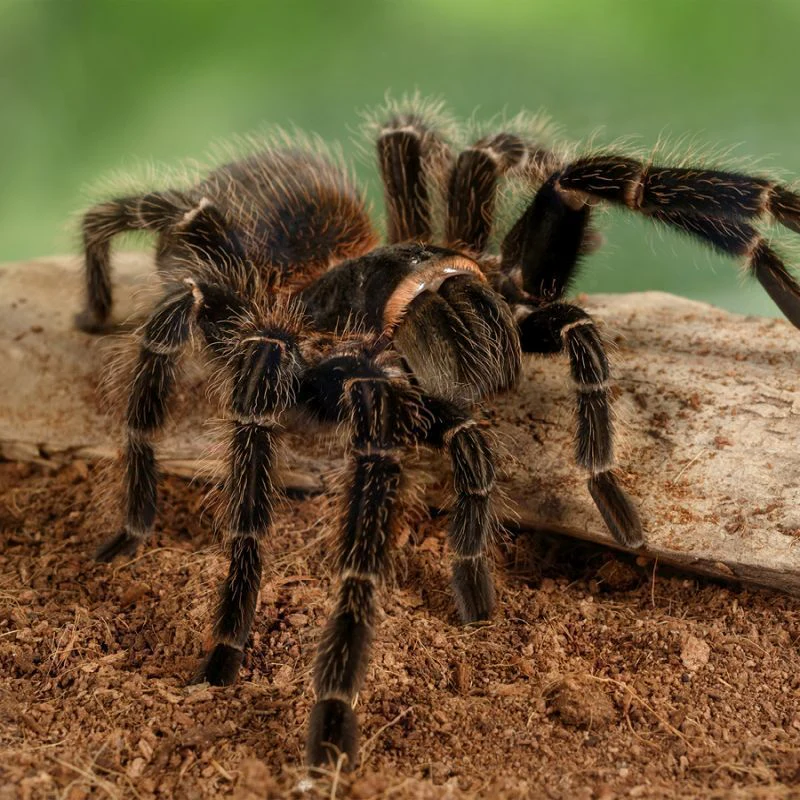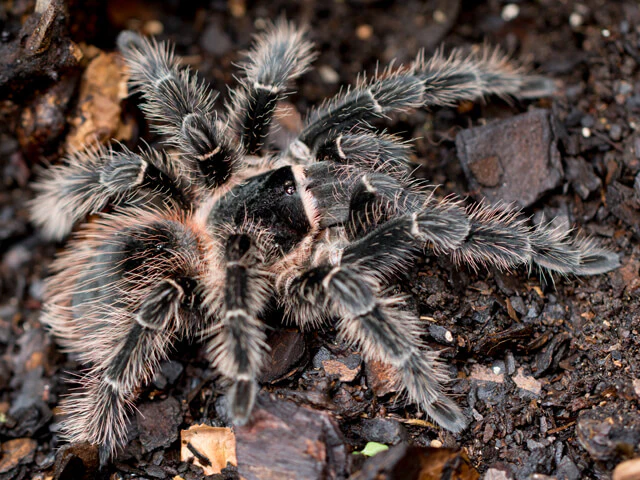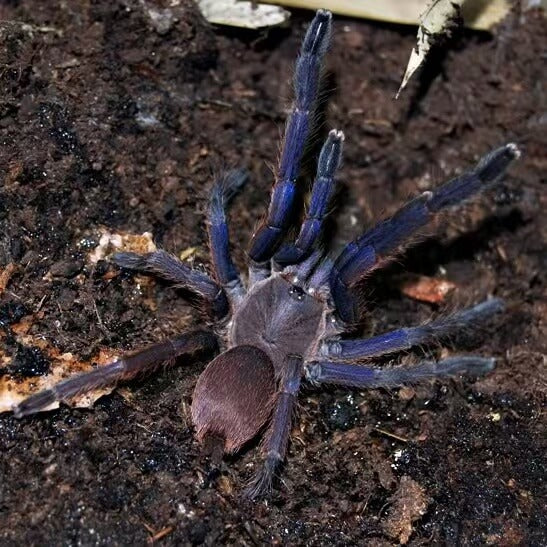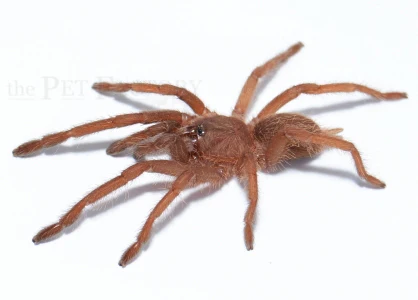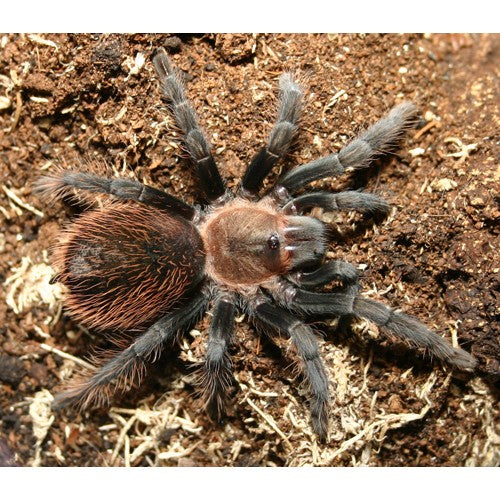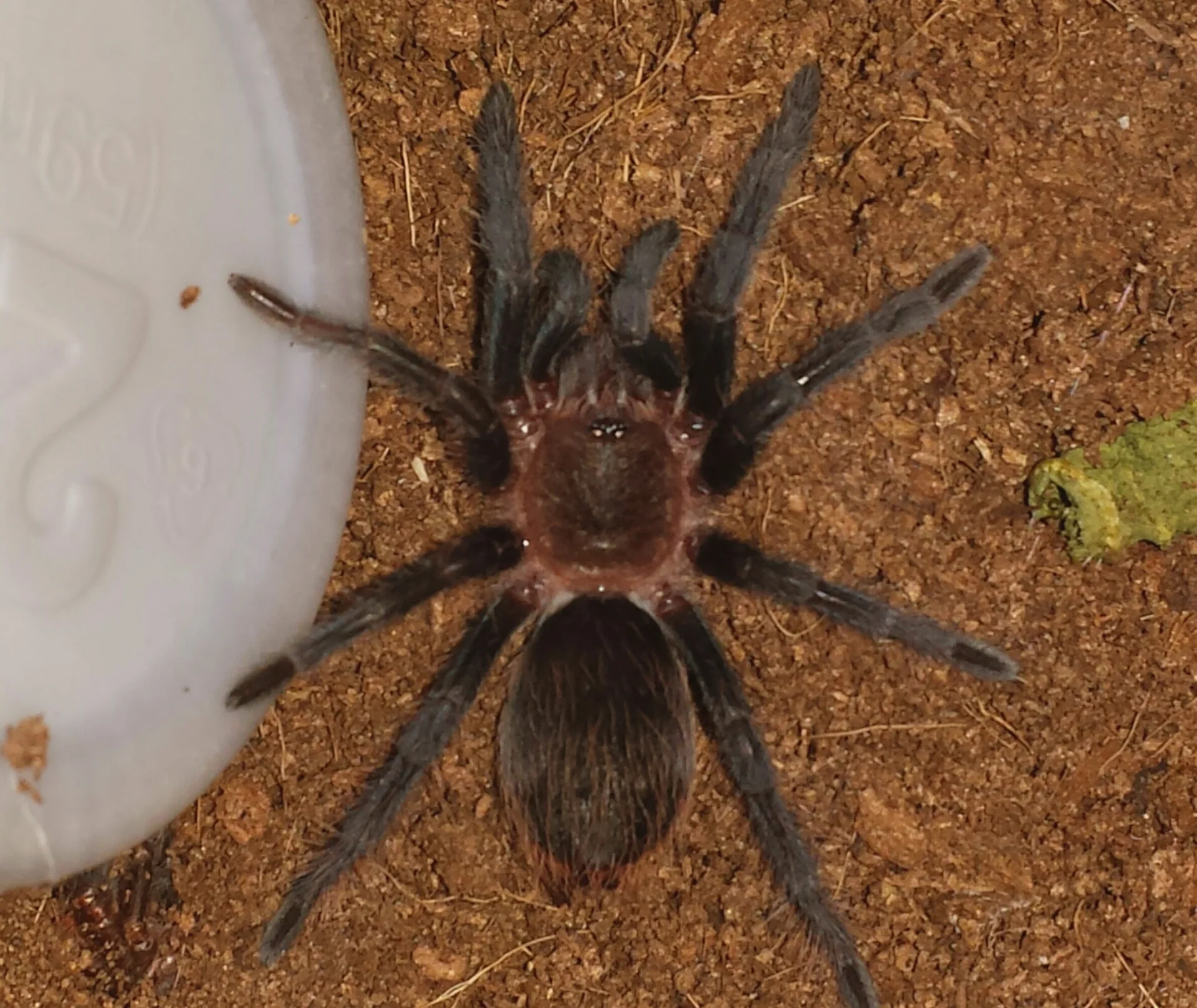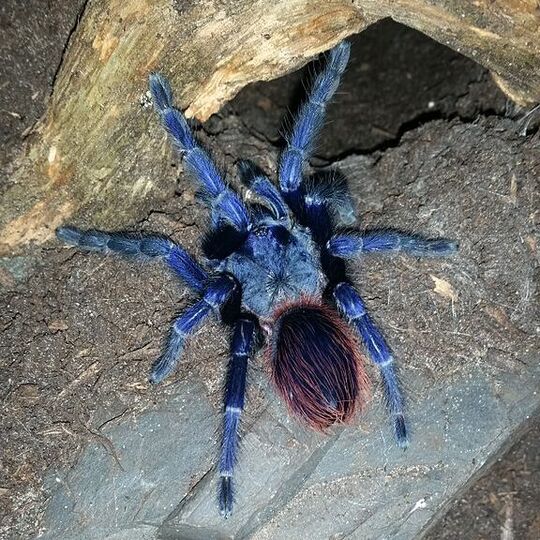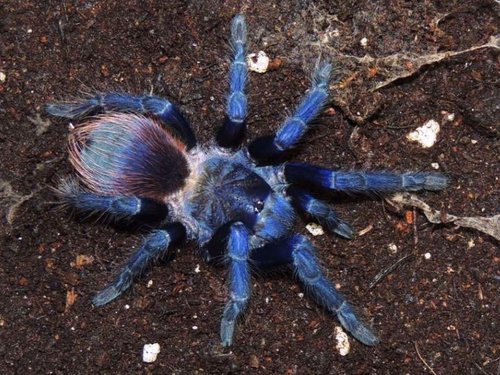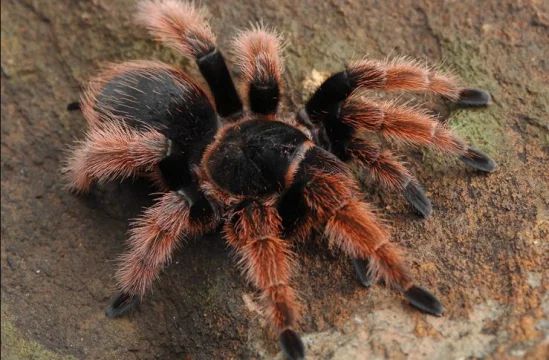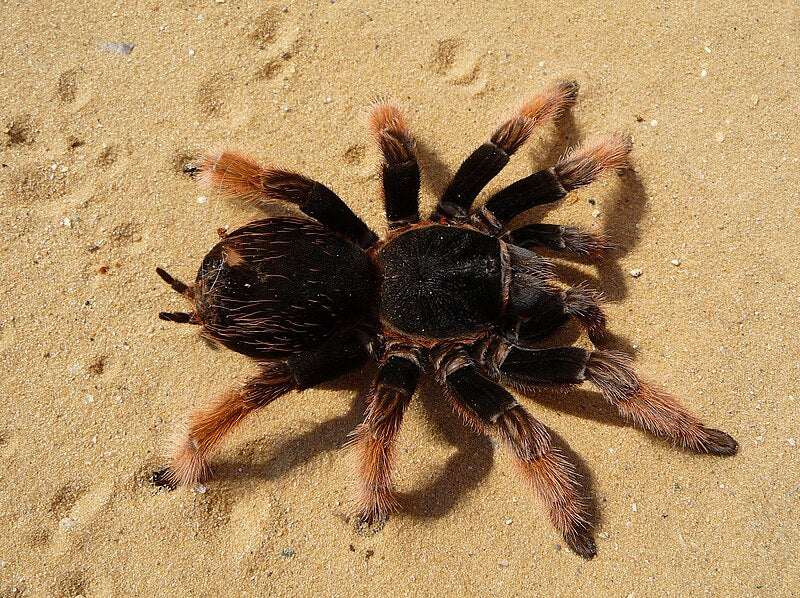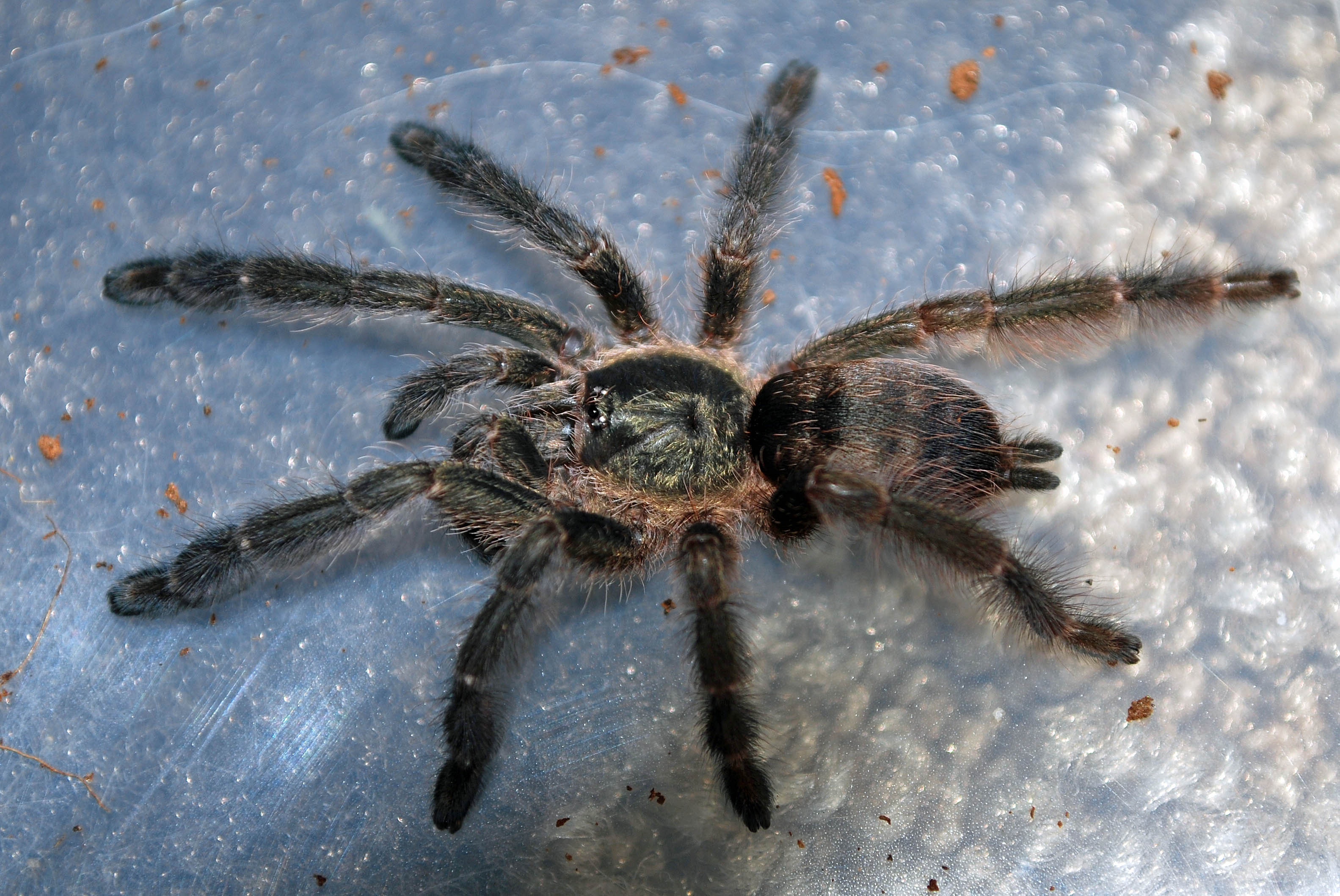
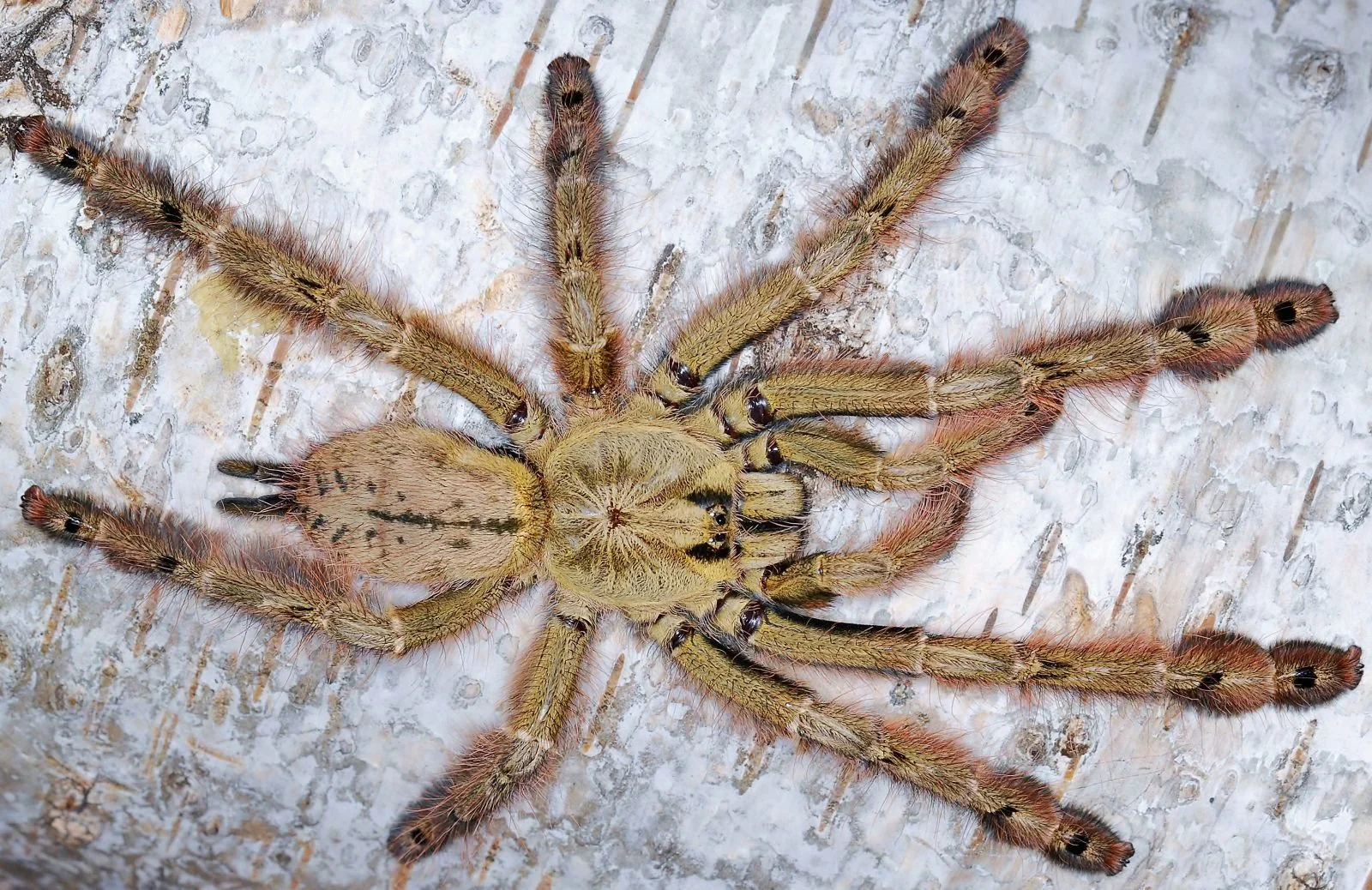
Featherleg Baboon Tarantula (Stromatopelma calceatum) Small
Featherleg Baboon Tarantula (Stromatopelma calceatum) Care Sheet
Quick Facts
| Attribute | Details |
|---|---|
| Common Name | Featherleg Baboon Tarantula |
| Scientific Name | Stromatopelma calceatum |
| Origin | West Africa (Ghana, Ivory Coast, Nigeria) |
| Adult Size | 12–15 cm leg span |
| Lifespan | Females: 15–20 years, Males: 3–4 years |
| Activity | Terrestrial / arboreal opportunist; nocturnal predator |
Behavior
-
Fast, defensive, and highly nervous; not recommended for handling.
-
Can display threat posture with raised front legs and exposed fangs.
-
Active hunter, primarily nocturnal, may climb if threatened.
-
Feeds aggressively; requires secure enclosure.
Enclosure Requirements
-
Tank Size: Minimum 30–40 liters for a single adult
-
Substrate: 8–12 cm of coconut fiber, soil, or peat moss; slightly moist but well-drained
-
Decor: Cork bark, rocks, logs, and hides; provide climbing opportunities
-
Humidity: 65–75%
-
Temperature:
-
Day: 24–28°C
-
Night: 20–24°C
-
-
Lighting: Low light; indirect only
-
Ventilation: Good airflow essential to prevent mold and maintain health
Compatibility
-
Best housed singly due to territorial and aggressive nature.
-
Avoid cohabiting with other spiders or small arthropods.
Diet
-
Carnivorous: live prey only
-
Crickets
-
Roaches
-
Mealworms / superworms
-
Occasional waxworms
-
-
Feed juveniles 2–3× per week; adults 1× per week
-
Provide shallow water dish
-
Remove uneaten prey after 24 hours
Care Tips
-
Avoid handling; extremely fast and defensive.
-
Maintain proper humidity for molting.
-
Provide hides and climbing surfaces.
-
Spot-clean regularly; remove mold and waste.
-
Secure lid required; very strong and fast climber.
Visual Quick Guide
-
🏠 Enclosure: ≥30–40 L, terrestrial substrate with climbing hides
-
🌡️ Temp: Day 24–28°C / Night 20–24°C
-
💧 Humidity: 65–75%
-
🍴 Diet: Carnivorous (live insects)
-
🕒 Activity: Nocturnal, fast-moving hunter
-
⚠️ Stress: Avoid handling; provide secure hides
Original: $25.69
-65%$25.69
$8.99Product Information
Product Information
Shipping & Returns
Shipping & Returns
Description
Featherleg Baboon Tarantula (Stromatopelma calceatum) Care Sheet
Quick Facts
| Attribute | Details |
|---|---|
| Common Name | Featherleg Baboon Tarantula |
| Scientific Name | Stromatopelma calceatum |
| Origin | West Africa (Ghana, Ivory Coast, Nigeria) |
| Adult Size | 12–15 cm leg span |
| Lifespan | Females: 15–20 years, Males: 3–4 years |
| Activity | Terrestrial / arboreal opportunist; nocturnal predator |
Behavior
-
Fast, defensive, and highly nervous; not recommended for handling.
-
Can display threat posture with raised front legs and exposed fangs.
-
Active hunter, primarily nocturnal, may climb if threatened.
-
Feeds aggressively; requires secure enclosure.
Enclosure Requirements
-
Tank Size: Minimum 30–40 liters for a single adult
-
Substrate: 8–12 cm of coconut fiber, soil, or peat moss; slightly moist but well-drained
-
Decor: Cork bark, rocks, logs, and hides; provide climbing opportunities
-
Humidity: 65–75%
-
Temperature:
-
Day: 24–28°C
-
Night: 20–24°C
-
-
Lighting: Low light; indirect only
-
Ventilation: Good airflow essential to prevent mold and maintain health
Compatibility
-
Best housed singly due to territorial and aggressive nature.
-
Avoid cohabiting with other spiders or small arthropods.
Diet
-
Carnivorous: live prey only
-
Crickets
-
Roaches
-
Mealworms / superworms
-
Occasional waxworms
-
-
Feed juveniles 2–3× per week; adults 1× per week
-
Provide shallow water dish
-
Remove uneaten prey after 24 hours
Care Tips
-
Avoid handling; extremely fast and defensive.
-
Maintain proper humidity for molting.
-
Provide hides and climbing surfaces.
-
Spot-clean regularly; remove mold and waste.
-
Secure lid required; very strong and fast climber.
Visual Quick Guide
-
🏠 Enclosure: ≥30–40 L, terrestrial substrate with climbing hides
-
🌡️ Temp: Day 24–28°C / Night 20–24°C
-
💧 Humidity: 65–75%
-
🍴 Diet: Carnivorous (live insects)
-
🕒 Activity: Nocturnal, fast-moving hunter
-
⚠️ Stress: Avoid handling; provide secure hides