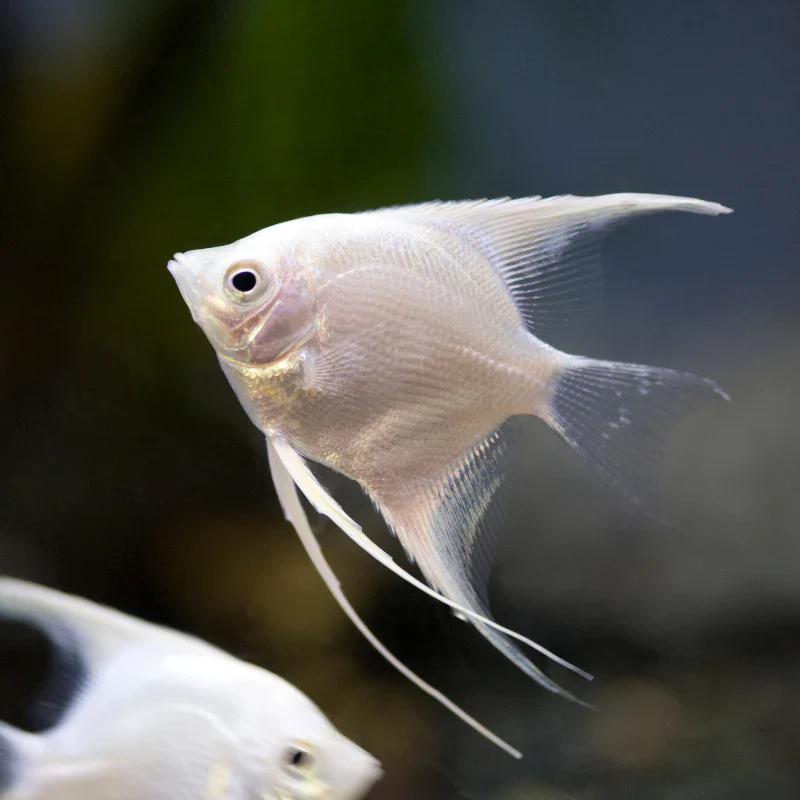
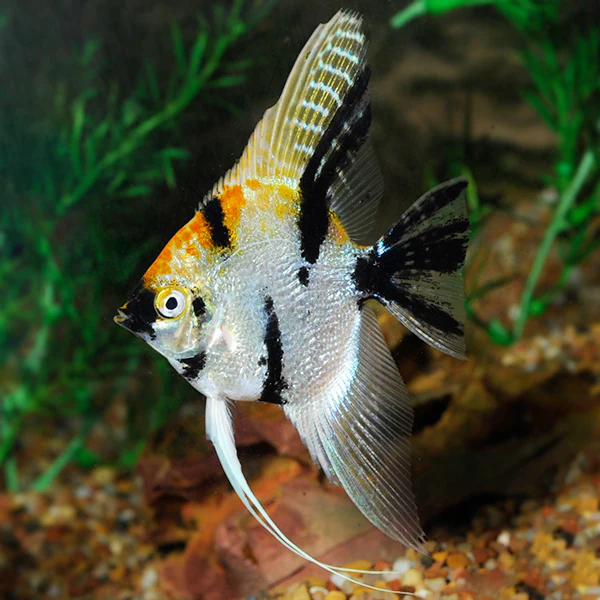
Koi Angel Sml
🐠 Koi Angelfish Overview
🔹 Basic Info
-
Scientific name: Pterophyllum scalare (Koi variant)
-
Common names: Koi Angelfish, Koi Scalare
-
Family: Cichlidae
-
Origin: Selective breeding of South American angelfish (Amazon Basin)
-
Size: 6 inches (15 cm) body height; fins can reach 8–10 inches
-
Lifespan: 8–10 years
🌿 Tank Requirements
-
Minimum tank size: 30 gallons for a pair; 55+ gallons for a small group
-
Water temperature: 25–29 °C (77–84 °F)
-
pH: 6.5–7.5
-
Hardness: 3–10 dGH
-
Filtration: Moderate; avoid strong currents — they prefer calm water
-
Lighting: Moderate — highlights the koi pattern
-
Aquascape:
-
Tall plants (Amazon swords, Vallisneria, Java fern)
-
Driftwood and rocks for vertical structure
-
Open midwater swimming space
-
Dark substrate enhances their koi-like colors
-
🍽️ Diet
Omnivorous and easy to feed:
-
High-quality flakes or pellets
-
Frozen or live foods: bloodworms, brine shrimp, daphnia
-
Occasional vegetable matter: spirulina, blanched zucchini or spinach
-
Feed 2–3 small meals per day
🧬 Behavior & Temperament
-
Semi-aggressive cichlid — territorial as adults, especially during breeding
-
Juveniles are peaceful; adults may chase or harass smaller fish
-
Prefer groups that can form natural hierarchies, or a single breeding pair
-
Intelligent and interactive with owners
🐣 Breeding Koi Angelfish
💧 Setup
-
Tank: 20–30 gallons for a pair
-
Temperature: 28–30 °C (82–86 °F)
-
pH: ~6.8–7.0
-
Provide a flat surface for egg-laying — slate, broad leaves, or aquarium glass
-
Light current; calm, quiet environment
♀️ & ♂️ Spawning Behavior
-
Pair cleans a flat surface together
-
Female lays rows of eggs; male fertilizes
-
Both parents guard eggs and fry; they fan eggs with fins for oxygenation
-
Eggs hatch in 2–3 days; fry free-swimming after 5–7 days
🐟 Fry Care
-
Start feeding infusoria or liquid fry food
-
Transition to baby brine shrimp as fry grow
-
Maintain excellent water quality; move fry to a separate tank if needed
🤝 Good Tank Mates
✅ Compatible Species
-
Corydoras catfish
-
Plecos (bristlenose)
-
Medium tetras (bleeding heart, black skirt, lemon)
-
Rasboras (harlequin, scissortail)
-
Rainbowfish
-
Peaceful gouramis (in large tanks)
⚠️ Avoid
-
Small fish that can be eaten (neon tetras, small shrimp)
-
Aggressive cichlids or fin-nippers
-
Overcrowded tanks
✨ Fun Facts
-
Koi Angelfish mimic the color patterns of koi carp, but each fish is unique.
-
Their triangular fins and graceful swimming make them one of the most eye-catching angelfish morphs.
-
Like all angelfish, they are cichlids, so they are intelligent, social, and sometimes territorial.
Original: $14.01
-65%$14.01
$4.90Product Information
Product Information
Shipping & Returns
Shipping & Returns
Description
🐠 Koi Angelfish Overview
🔹 Basic Info
-
Scientific name: Pterophyllum scalare (Koi variant)
-
Common names: Koi Angelfish, Koi Scalare
-
Family: Cichlidae
-
Origin: Selective breeding of South American angelfish (Amazon Basin)
-
Size: 6 inches (15 cm) body height; fins can reach 8–10 inches
-
Lifespan: 8–10 years
🌿 Tank Requirements
-
Minimum tank size: 30 gallons for a pair; 55+ gallons for a small group
-
Water temperature: 25–29 °C (77–84 °F)
-
pH: 6.5–7.5
-
Hardness: 3–10 dGH
-
Filtration: Moderate; avoid strong currents — they prefer calm water
-
Lighting: Moderate — highlights the koi pattern
-
Aquascape:
-
Tall plants (Amazon swords, Vallisneria, Java fern)
-
Driftwood and rocks for vertical structure
-
Open midwater swimming space
-
Dark substrate enhances their koi-like colors
-
🍽️ Diet
Omnivorous and easy to feed:
-
High-quality flakes or pellets
-
Frozen or live foods: bloodworms, brine shrimp, daphnia
-
Occasional vegetable matter: spirulina, blanched zucchini or spinach
-
Feed 2–3 small meals per day
🧬 Behavior & Temperament
-
Semi-aggressive cichlid — territorial as adults, especially during breeding
-
Juveniles are peaceful; adults may chase or harass smaller fish
-
Prefer groups that can form natural hierarchies, or a single breeding pair
-
Intelligent and interactive with owners
🐣 Breeding Koi Angelfish
💧 Setup
-
Tank: 20–30 gallons for a pair
-
Temperature: 28–30 °C (82–86 °F)
-
pH: ~6.8–7.0
-
Provide a flat surface for egg-laying — slate, broad leaves, or aquarium glass
-
Light current; calm, quiet environment
♀️ & ♂️ Spawning Behavior
-
Pair cleans a flat surface together
-
Female lays rows of eggs; male fertilizes
-
Both parents guard eggs and fry; they fan eggs with fins for oxygenation
-
Eggs hatch in 2–3 days; fry free-swimming after 5–7 days
🐟 Fry Care
-
Start feeding infusoria or liquid fry food
-
Transition to baby brine shrimp as fry grow
-
Maintain excellent water quality; move fry to a separate tank if needed
🤝 Good Tank Mates
✅ Compatible Species
-
Corydoras catfish
-
Plecos (bristlenose)
-
Medium tetras (bleeding heart, black skirt, lemon)
-
Rasboras (harlequin, scissortail)
-
Rainbowfish
-
Peaceful gouramis (in large tanks)
⚠️ Avoid
-
Small fish that can be eaten (neon tetras, small shrimp)
-
Aggressive cichlids or fin-nippers
-
Overcrowded tanks
✨ Fun Facts
-
Koi Angelfish mimic the color patterns of koi carp, but each fish is unique.
-
Their triangular fins and graceful swimming make them one of the most eye-catching angelfish morphs.
-
Like all angelfish, they are cichlids, so they are intelligent, social, and sometimes territorial.