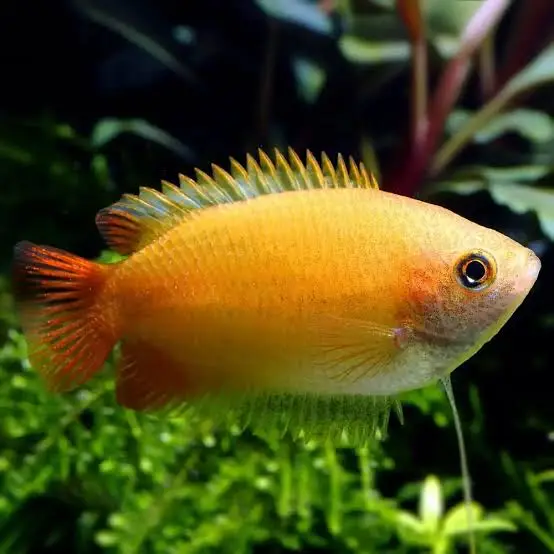
Honey Gourami Medium Large
🐟 Honey Gourami Overview
🔹 Basic Info
-
Scientific name: Trichogaster chuna (formerly Colisa chuna)
-
Common names: Honey Gourami, Sunset Gourami, Red Honey Gourami
-
Family: Osphronemidae
-
Origin: India and Bangladesh (slow-moving rivers, ponds, and rice fields)
-
Size: 2–2.5 inches (5–6 cm)
-
Lifespan: 4–8 years
🌿 Tank Requirements
-
Minimum tank size: 15–20 gallons for a pair (larger for a small group).
-
Water temperature: 24–28 °C (75–82 °F)
-
pH: 6.0–7.5
-
Hardness: 4–15 dGH
-
Filtration: Gentle flow (sponge or low-output filter preferred).
-
Lighting: Moderate.
-
Aquascape:
-
Dense plants (especially tall and floating types like water sprite, hornwort, or Amazon frogbit).
-
Open swimming areas.
-
A dark substrate and driftwood help bring out their colors.
-
🍽️ Diet
Honey Gouramis are omnivores. They’ll happily accept:
-
High-quality flakes or micro-pellets
-
Frozen or live foods: brine shrimp, bloodworms, daphnia, mosquito larvae
-
Vegetables and algae-based foods occasionally
Feeding small, varied meals 2–3 times daily enhances color and health.
🧬 Behavior & Temperament
-
Exceptionally peaceful and shy, ideal for community tanks.
-
Males become more colorful and territorial during breeding but rarely aggressive.
-
Prefer calm tank mates and a serene environment.
-
Often swim near the surface, occasionally gulping air with their labyrinth organ.
🐣 Breeding Honey Gouramis
💧 Setup
-
Separate breeding tank: 10–15 gallons, shallow (6–8 inches of water).
-
Temperature: 28–30 °C (82–86 °F).
-
pH: 6.5–7.0
-
Add floating plants (important for nest support) and gentle filtration.
-
Use a tight lid to maintain warm, humid air for developing fry.
♂️ Courtship & Nesting
-
The male builds a small bubble nest beneath floating plants or in a corner.
-
When ready, he displays intense orange or reddish coloration and courts the female.
-
Spawning involves the male wrapping around the female, collecting the eggs, and placing them in the nest.
♀️ After Spawning
-
Remove the female post-spawning to prevent stress or harm.
-
The male guards the eggs until they hatch (~24–36 hours).
-
Remove the male once fry are free-swimming (2–3 days later).
🐟 Fry Care
-
Start feeding infusoria or liquid fry food.
-
After a few days, transition to baby brine shrimp or finely crushed flakes.
-
Maintain excellent water quality and warm temperatures.
🤝 Good Tank Mates
✅ Peaceful Companions
-
Small tetras (ember, neon, glowlight)
-
Rasboras (harlequin, chili, lambchop)
-
Corydoras catfish
-
Otocinclus
-
Small shrimp (Amano, cherry) — though young shrimp may be eaten
-
Kuhli loaches
-
Other small peaceful gouramis (avoid males of the same species in small tanks)
⚠️ Avoid
-
Aggressive or fin-nipping fish (barbs, large cichlids).
-
Fast-moving fish that outcompete them for food.
-
Large or boisterous species.
🌸 Fun Facts
-
The male Honey Gourami changes color during breeding, turning bright orange-red with a dark blue throat and belly.
-
Their gentle personality makes them one of the best gouramis for community tanks.
-
They thrive in soft, slightly acidic water with plenty of plants and calm conditions.
Original: $7.00
-65%$7.00
$2.45Product Information
Product Information
Shipping & Returns
Shipping & Returns
Description
🐟 Honey Gourami Overview
🔹 Basic Info
-
Scientific name: Trichogaster chuna (formerly Colisa chuna)
-
Common names: Honey Gourami, Sunset Gourami, Red Honey Gourami
-
Family: Osphronemidae
-
Origin: India and Bangladesh (slow-moving rivers, ponds, and rice fields)
-
Size: 2–2.5 inches (5–6 cm)
-
Lifespan: 4–8 years
🌿 Tank Requirements
-
Minimum tank size: 15–20 gallons for a pair (larger for a small group).
-
Water temperature: 24–28 °C (75–82 °F)
-
pH: 6.0–7.5
-
Hardness: 4–15 dGH
-
Filtration: Gentle flow (sponge or low-output filter preferred).
-
Lighting: Moderate.
-
Aquascape:
-
Dense plants (especially tall and floating types like water sprite, hornwort, or Amazon frogbit).
-
Open swimming areas.
-
A dark substrate and driftwood help bring out their colors.
-
🍽️ Diet
Honey Gouramis are omnivores. They’ll happily accept:
-
High-quality flakes or micro-pellets
-
Frozen or live foods: brine shrimp, bloodworms, daphnia, mosquito larvae
-
Vegetables and algae-based foods occasionally
Feeding small, varied meals 2–3 times daily enhances color and health.
🧬 Behavior & Temperament
-
Exceptionally peaceful and shy, ideal for community tanks.
-
Males become more colorful and territorial during breeding but rarely aggressive.
-
Prefer calm tank mates and a serene environment.
-
Often swim near the surface, occasionally gulping air with their labyrinth organ.
🐣 Breeding Honey Gouramis
💧 Setup
-
Separate breeding tank: 10–15 gallons, shallow (6–8 inches of water).
-
Temperature: 28–30 °C (82–86 °F).
-
pH: 6.5–7.0
-
Add floating plants (important for nest support) and gentle filtration.
-
Use a tight lid to maintain warm, humid air for developing fry.
♂️ Courtship & Nesting
-
The male builds a small bubble nest beneath floating plants or in a corner.
-
When ready, he displays intense orange or reddish coloration and courts the female.
-
Spawning involves the male wrapping around the female, collecting the eggs, and placing them in the nest.
♀️ After Spawning
-
Remove the female post-spawning to prevent stress or harm.
-
The male guards the eggs until they hatch (~24–36 hours).
-
Remove the male once fry are free-swimming (2–3 days later).
🐟 Fry Care
-
Start feeding infusoria or liquid fry food.
-
After a few days, transition to baby brine shrimp or finely crushed flakes.
-
Maintain excellent water quality and warm temperatures.
🤝 Good Tank Mates
✅ Peaceful Companions
-
Small tetras (ember, neon, glowlight)
-
Rasboras (harlequin, chili, lambchop)
-
Corydoras catfish
-
Otocinclus
-
Small shrimp (Amano, cherry) — though young shrimp may be eaten
-
Kuhli loaches
-
Other small peaceful gouramis (avoid males of the same species in small tanks)
⚠️ Avoid
-
Aggressive or fin-nipping fish (barbs, large cichlids).
-
Fast-moving fish that outcompete them for food.
-
Large or boisterous species.
🌸 Fun Facts
-
The male Honey Gourami changes color during breeding, turning bright orange-red with a dark blue throat and belly.
-
Their gentle personality makes them one of the best gouramis for community tanks.
-
They thrive in soft, slightly acidic water with plenty of plants and calm conditions.